
Predictive HEDIS gap identification gives quality teams months to act
Get ahead of claims lag and reach independent practices without an EHR connection to close HEDIS gaps months earlier.



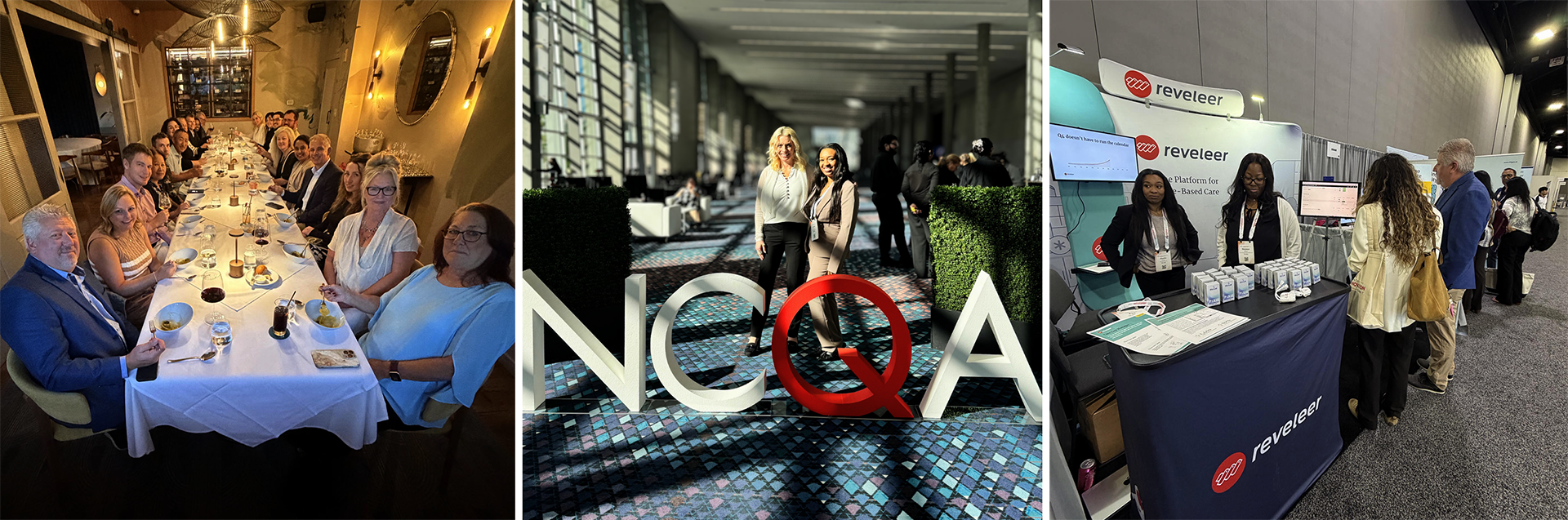
Over four days in Atlanta, sessions at the NCQA Health Innovation Summit 2026 covered digital quality measures, ambient AI, colorectal cancer screening gaps, and Star Ratings strategy. The topics differed, but one problem kept coming up. Plans and providers often learn who missed a HEDIS® measure after the window to fix it has closed.
Different sessions pointed to several causes, including chart chases, claims lag, and compressed fourth-quarter outreach. Smaller independent practices face the same delay with fewer resources to close it. Care gap management that predicts HEDIS quality gaps can give quality teams months to act, compared with weeks today, and it builds the continuous clinical record that full-population digital reporting will require.
Dr. Vivek Garg, NCQA's president and CEO, addressed the purpose of quality measurement in the closing remarks. Garg said that when organizations focus only on accountability, they can get better at managing the number without improving care. According to Garg, the next generation of measures should point clinicians and care teams to the next best action. A ranked, year-round gap list gives a quality team that next best action, provided practices can see the list and act on it.
If we focus only on accountability, people can become better at managing the number without actually improving care.”
- Vivek Garg, MD, MBA, President and CEO, NCQA
Seasonal timelines and small practices delay gap closure
Health plans have treated HEDIS gap closure as a seasonal effort for years, concentrating outreach and chart chases in the third and fourth quarters of the measurement year. By Q4, a member who still needs a screening or an A1C test has a few weeks to schedule it, complete it, and have the result reach the plan.
Carlos Rodriguez from Aegis Medical Group described the pattern in the NCQA Summit session "From Chart Chase to Real-Time Quality." He said anyone in Medicare Advantage (MA) knows that in the fourth quarter "everybody goes crazy" as teams start calling patients and building priority lists around members with the most open conditions and unmet quality gaps.
Claims lag can further delay care gap closure. In the session on clinical quality language and Fast Healthcare Interoperability Resources, Dr. Amy Burke of Microsoft said claims data typically lags 60 to 90 days. She asked, "How much impact can we really drive on what's already happened?"
Late data hurts most where practices are smallest. Electronic health record (EHR) connections between a plan and a health system offer a continuous flow of clinical data. Plans cannot see inside independent and rural practices outside a health system's EHR, and the practices rarely have the IT capacity or staff to build a connection. Independent and rural practices account for a large share of a plan's open care gaps, and closing them requires work at the level of each practice, each chart, and each member.
At the NCQA Summit, the session "The Other 42%: Making Quality's Next Chapter Work for Independent Providers," led by Paul McBride of Southeast Primary Care Partners, described independent primary care providers as vital to Medicaid and rural communities and said administrative burden keeps many of them out of value-based programs. In the colorectal cancer screening panel, moderator Jody Hoyos, CEO of the Prevent Cancer Foundation, said a navigator model like the one a health system described is not necessarily feasible for every primary care provider outside an organized system.
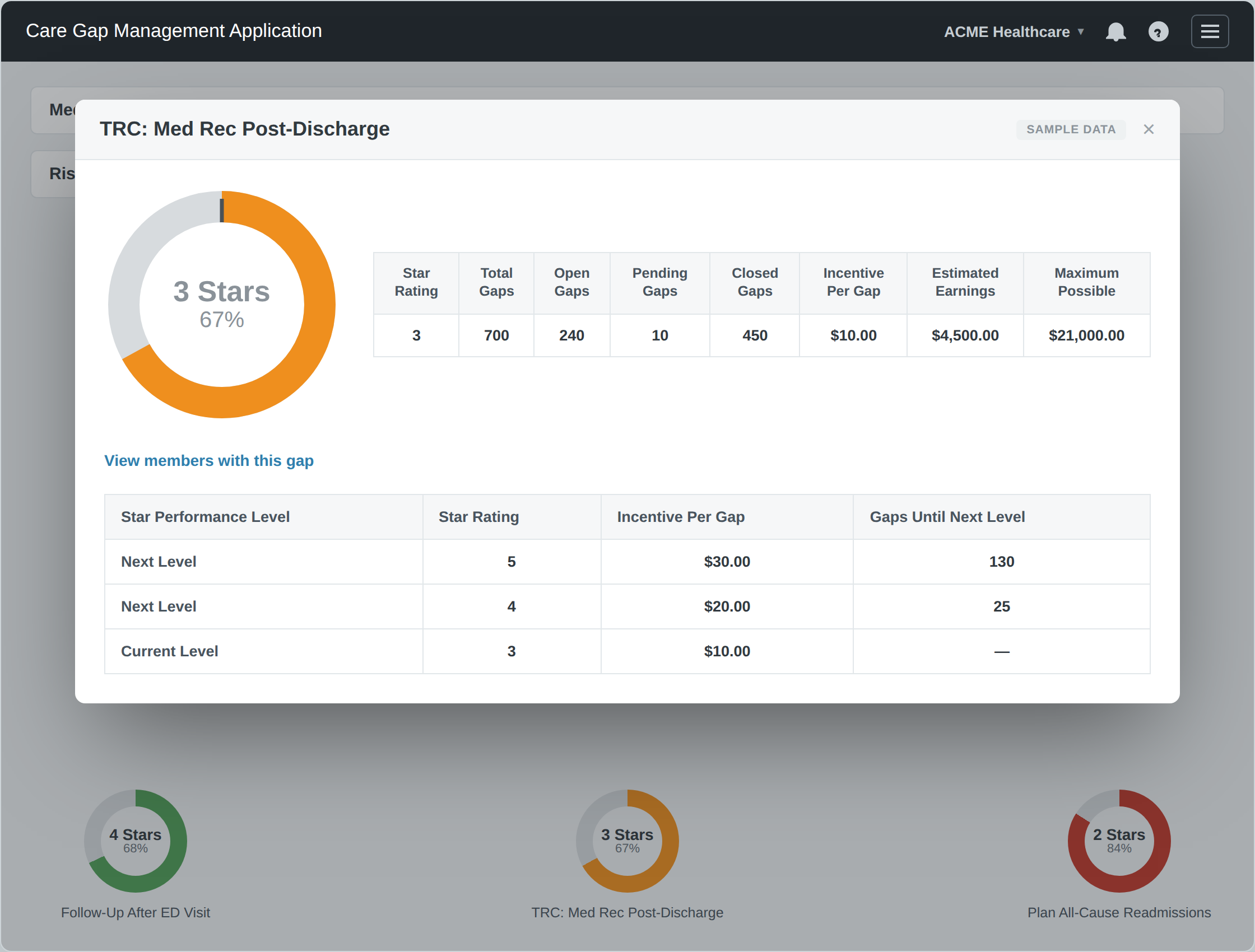
Practices that cannot connect to a plan's data systems or hire quality coordinators need plans to simplify care gap closure through a direct path to submit documentation, outreach timed to each practice's activity, and incentives that practices can see. Showing earnings next to the open gap tells the practice what closing it is worth today.
Hybrid retirement requires year-round clinical data
NCQA plans to phase out the hybrid reporting method by measurement year 2029 and make HEDIS reporting fully digital by measurement year 2030. When a hybrid measure moves to Electronic Clinical Data Systems (ECDS) or administrative specifications, NCQA removes sampling and measures the full eligible population. A plan that abstracts a sample of charts today will report on every member, including every member of every small practice, using clinical data that has to be in hand throughout the year.
MultiCare previewed that workload. Anna Taylor of MultiCare described a move from samples of 2,500 patients per measure across eleven measures to about 100,000 patients across five measures, with accuracy comparable to the spreadsheets it replaced. The build took roughly five years, much of it on data governance and curation. Burke described AI agents for data mapping, care gap closure, submission, and validation, with a human always in the loop.
Predictive HEDIS quality gaps rank members before the window closes
A predictive model gives plans and practices, including small independent practices, the data they need to close quality gaps before the measurement window closes. Models can score each member against each open measure with inputs including prior-year measure status, claims history, lab results, pharmacy fills, visit patterns, and clinical data from EHRs and health information exchanges.
The output is a ranked list of members likely to miss a measure, ordered by how closable the gap is and by which intervention fits, such as an outreach call, a standing lab order, an at-home kit, or a provider visit. Quality teams receive that list in the first half of the measurement year, when appointment schedules still have room.
The colorectal cancer screening panel showed how data completeness limits health plans' ability to implement predictive quality models. The session title cites 54 million patients left behind, and panelists traced part of the gap to measurement. Because screening data is often years old, national analyses still describe screening patterns from 2023 and 2024.
A prediction built on data that old will not help a plan close a gap this year. One built on continuously refreshed clinical and lab data shows which test a member completed, where the result lives, and whether follow-up happened.
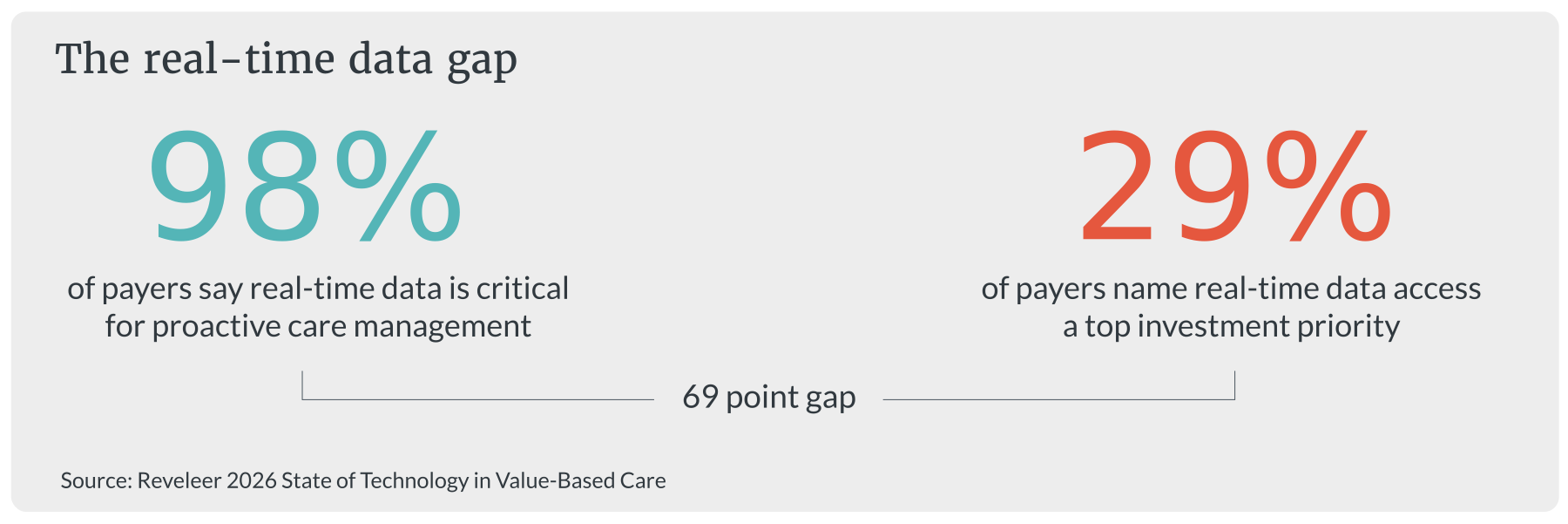
Many health plans recognize the need for continuous, real-time quality data but have not made it an investment priority. In a 2026 survey of payer and provider leaders commissioned by Reveleer, 98% of payers said real-time data is critical for proactive care management, yet only 29% named real-time data access a top investment priority. A 69-percentage-point gap separates what payers say they need from what they prioritize for investment.
Year-round gap closure starts before the next measurement year
Across the summit sessions, speakers returned to one lesson: Gaps close more easily when teams find them earlier and make closing them simple for providers. For plans pursuing proactive Star Ratings improvement, four steps apply before the next measurement year opens.
- Rank at-risk members by measure at the start of the year, and refresh the list monthly.
- Attach a closure pathway to every gap, such as direct documentation upload for practices without an EHR connection, outreach, standing orders, at-home testing, or a scheduled visit.
- Show practices what a closed gap earns by displaying incentive progress next to each open gap.
- Verify data completeness and keep a traceable record for each ECDS-bound measure, linking every closed gap back to clinical evidence.
Plans that follow these steps year-round supply the steady clinical evidence ECDS rewards and reduce the volume of chart retrieval in Q4. Reveleer Care Gap Manager combines gap lists, provider evidence submission, incentive visibility, and outreach in one application, giving quality teams and practices the same view of each open gap and what closing it earns. Speak with a Reveleer expert about reaching every practice in your network.

HEDIS care gap questions
Which data sources feed a predictive HEDIS gap model?
Predictive HEDIS gap models draw on prior-year measure status, claims, lab results, pharmacy fills, visit history, and clinical data from EHRs and health information exchanges. Each feed adds evidence of what a member has completed, which lets the model rank members by likelihood of missing a measure and by how closable the gap is.
When does NCQA retire the HEDIS hybrid method?
NCQA plans to phase out the hybrid method by measurement year 2029 and make HEDIS reporting fully digital by measurement year 2030. Some hybrid measures revert to administrative-only reporting, and others move to ECDS, which reports on the full eligible population with no sampling.
How can health plans close HEDIS gaps at practices without an EHR connection?
Plans can give independent and rural practices a direct path to upload documentation for each open gap, time outreach to each practice's activity, and show the incentive a practice earns next to each open gap. Each step reduces the administrative burden that keeps many small practices out of value-based programs and adds the clinical evidence that full-population ECDS reporting requires.

About the Author
Related Resources

The ROI of AI-enabled prospective risk adjustment
Learn how AI-enabled prospective risk adjustment drives better clinical outcomes, reduces costs, and improves value-based care.

Ethical AI in value-based care: Balancing innovation with trust and transparency
Watch the session, ‘Ethical AI in Value-Based Care’, to learn about Reveleer’s AI trust and transparency.

Simplifying HEDIS®: How intelligent automation gives you more time
Learn how intelligent automation accelerates HEDIS reporting, improves efficiency, and enhances data accuracy for healthcare organizations.

