
A physician's view of AI-driven prospective risk


A physician's view of AI-driven prospective risk
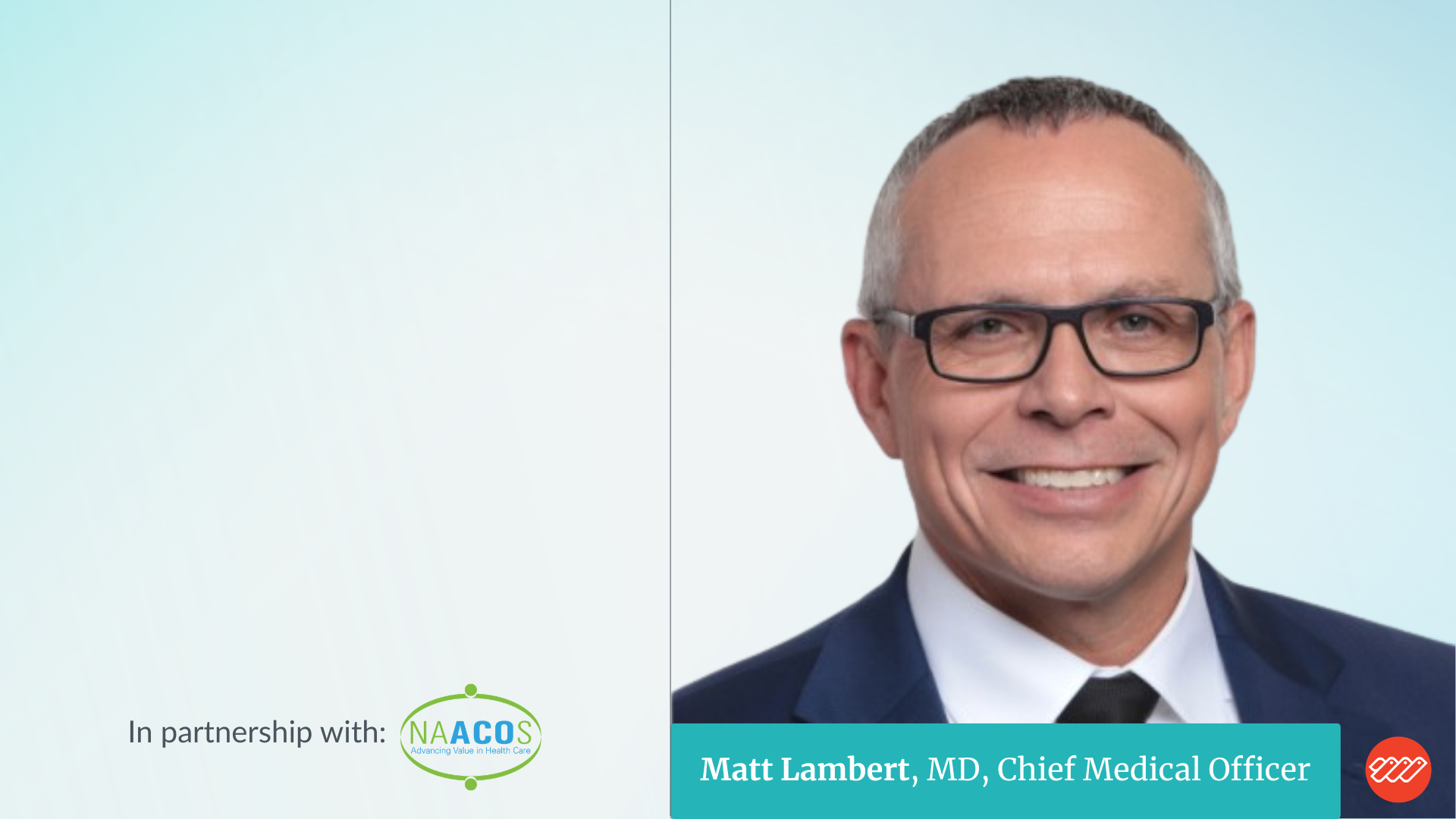
Primary care physicians manage large patient panels in short visits while carrying a heavy documentation load, and they are still asked to surface every undiagnosed chronic condition during the encounter. When suspect lists arrive full of false positives, clinicians stop trusting them: alerts get dismissed, real diagnoses slip through, and the work shifts to costly retrospective cleanup. In this NAACOS bootcamp session, Dr. Matt Lambert discusses how prospective risk adjustment can enable AI suspecting trustworthy at the point of care and what makes clinicians walk away from it.
What the session covers:
- Why clinicians override most suspect alerts, and the difference between reducing noise (fewer false positives) and improving signal (higher confidence in each suspect)
- How separating AI evidence extraction from deterministic, clinician-authored logic produces suspects physicians can act on during the visit
- The three things CMS and auditors expect from every suspect — a traceable evidence chain, explainable logic, and compliance-ready output — and why black-box AI fails each one
- How capturing HCCs prospectively, at the point of care, protects RAF accuracy and reduces the audit risk that follows retrospective corrections
- Guardrails that prevent diagnosis inflation, from distinguishing transient conditions from chronic ones to separating medication use from an actual diagnosis
- The evaluation questions to ask any vendor: does the solution put operational burden on your team or on the vendor, and does provider engagement show trust or fatigue
Dr. Lambert draws on more than 15 years of clinical leadership in value-based care to show how explainable, audit-ready suspecting earns provider trust instead of adding to the alert burden. Watch the full session for a framework your clinical, analytics, and executive teams can use to evaluate AI for risk adjustment, then see how Reveleer brings prospective risk adjustment into the EHR workflow your providers already use.



Related Resources

The ROI of AI-enabled prospective risk adjustment
Learn how AI-enabled prospective risk adjustment drives better clinical outcomes, reduces costs, and improves value-based care.

Ethical AI in value-based care: Balancing innovation with trust and transparency
Watch the session, ‘Ethical AI in Value-Based Care’, to learn about Reveleer’s AI trust and transparency.

Simplifying HEDIS®: How intelligent automation gives you more time
Learn how intelligent automation accelerates HEDIS reporting, improves efficiency, and enhances data accuracy for healthcare organizations.

